Phase 1 Desk Study: Reviewing Land-Contamination Risk in England
What preliminary land-contamination assessment covers in England, including desk research, walkover, a conceptual site model and risk-based further investigation.
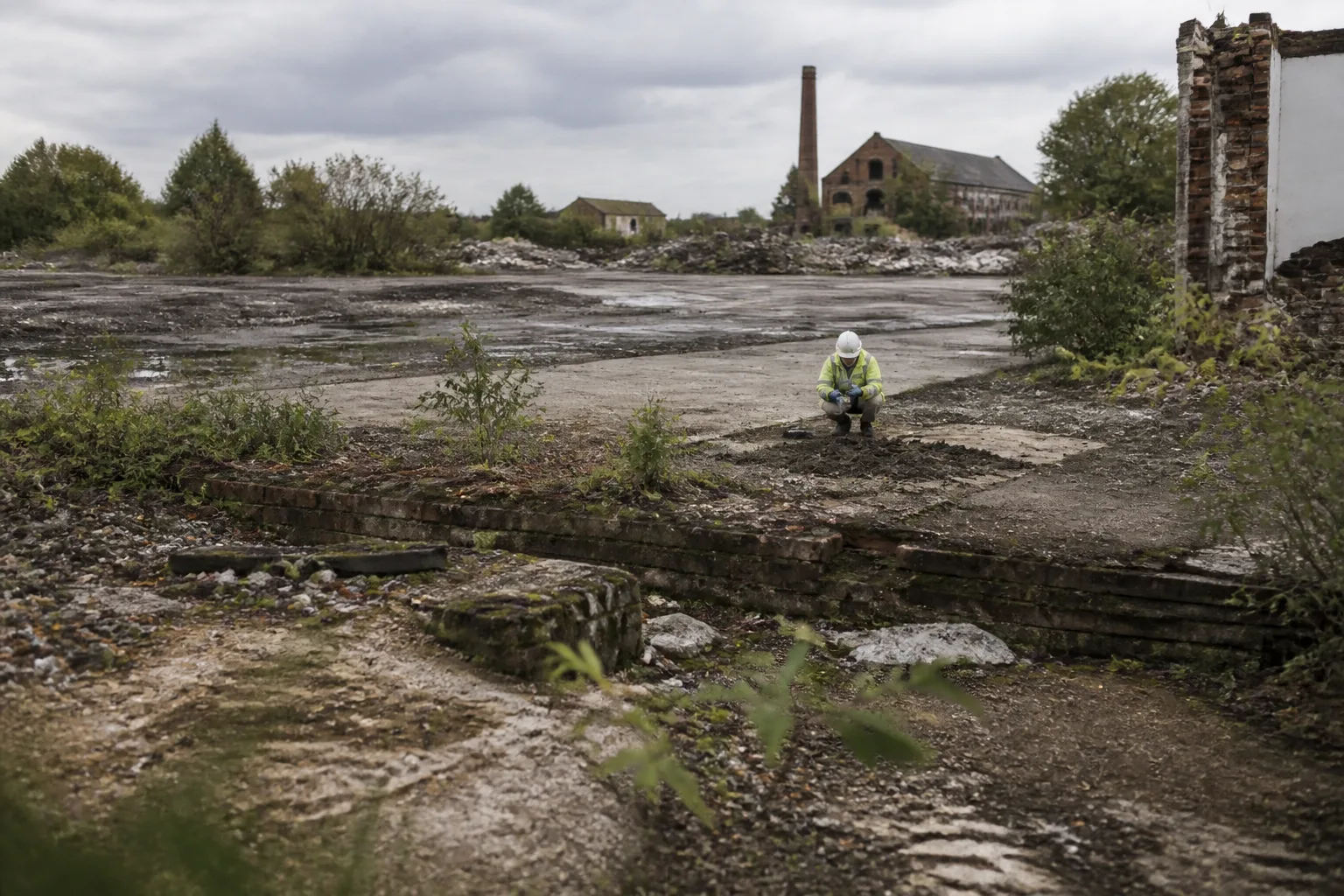
Quick answer
In England, a preliminary land-contamination assessment uses desk research and a site walkover to develop a conceptual site model and assess potential pollutant linkages. The next investigation depends on the identified risks and decision context. A desktop site-analysis layer does not replace this work by an appropriately competent person.
Historic uses can raise questions that a current aerial image or constraint map will not answer. The purpose of an early contamination review is to identify plausible sources, pathways and receptors, explain uncertainty and decide what evidence is needed before the project proceeds.
Set the jurisdiction and assessment purpose
This guide follows England’s land-contamination guidance. Confirm the applicable regulator and planning authority for work elsewhere. Agree whether the assessment supports acquisition, a planning application, a condition or design development. The required scope depends on the site, proposed use and decision; a generic report title does not establish adequacy.
Build the preliminary conceptual site model
Gather relevant historic maps, records of former activities, geology and groundwater information, environmental records and previous investigations where available. Combine desk research with an appropriately planned site walkover. Identify possible contaminant sources, migration pathways and people, waters or other receptors that could be affected. Record evidence quality and gaps.
Decide whether further investigation is needed
Environment Agency LCRM starts risk assessment with a preliminary assessment. Where evidence cannot establish an acceptable risk, further investigation or assessment may be needed. A former industrial use is a reason to investigate the history, not proof of a particular contaminant or remediation requirement. The competent assessor should justify sampling and analysis against the conceptual model.
Connect findings to the design without assuming a remedy
A proposed basement, garden, drainage system or change of use can alter exposure and pathways. Discuss these changes with the relevant specialists before selecting a response. Soil removal, cover systems, treatment and other measures need site-specific design and verification. Do not assume that one excavation depth or a generic cost per cubic metre establishes a safe or sufficient solution.
Budget from a defined scope
Seek project-specific quotations for desk work, investigation, analysis and any remediation or verification. Ground conditions, access, contaminants, disposal classification and the intended use affect the scope. Waste classification and lawful handling require their own checks; a planning risk conclusion alone does not establish how excavated material may be disposed of.
State what the early Atlasly review contributes
Use available site context to identify questions and organise the next searches. This review does not verify complete historic land-use archives, contamination sampling or a competent-person contamination report in Atlasly. Record these as separate evidence tasks and retain specialist conclusions with the site review.
Illustrative example
Illustrative scenario: A desktop review identifies a former potentially contaminative use. The team records the evidence and commissions the appropriate investigation before treating a remediation allowance as a reliable project cost.
Frequently asked
Is a Phase 1 study the same as taking soil samples?
A preliminary assessment is primarily desk research, site walkover and risk assessment. Intrusive investigation, where required, is a further defined task.
Does an industrial history mean the site is contaminated?
It can indicate a potential source, but the relevant risks require evidence about contaminants, pathways and receptors.
Can this guide provide a reliable remediation budget?
No. Obtain advice and quotations against a site-specific scope.
Can a desktop map replace the competent-person assessment?
No. It can help identify questions but does not supply the required investigation and professional assessment.
Conclusion
Commission the evidence needed for the decision and keep its uncertainties visible. Connect contamination findings with the due-diligence review, ground investigation and the evolving design.

About the author
Shatakshi Patil
Architect writing about pre-construction due diligence, planning context, and site intelligence workflows for design teams using Atlasly.
Sources and references
Authoritative references for the planning policies, regulations, and standards referenced in this article. Always check the publisher for the latest version.
Related articles
Auto-suggested
site feasibility study checklist
Site Feasibility Study Checklist: 12 Things to Assess Before Your Design Brief
A practical 12-point checklist covering planning, physical, environmental, access, and viability factors that should be tested before briefing design work.
Read
pre-construction due diligence for architects
Pre-Construction Due Diligence for Architects: An Early Review Checklist
An early due-diligence checklist for architects covering site evidence, planning questions, physical conditions, specialist investigations and unresolved project assumptions.
Read
Development
Site Due Diligence: 30 Questions Every Developer Should Answer Before Exchange
A working developer checklist of 30 site due diligence questions covering planning, environmental, legal, physical, and market risks before exchange of contracts.
Read
Environmental
Wind Microclimate Studies: Setting a Pedestrian Comfort and Safety Brief
How to agree a site-specific wind assessment brief, distinguish comfort and safety criteria, and review specialist evidence and mitigation without universal height triggers.
Read